
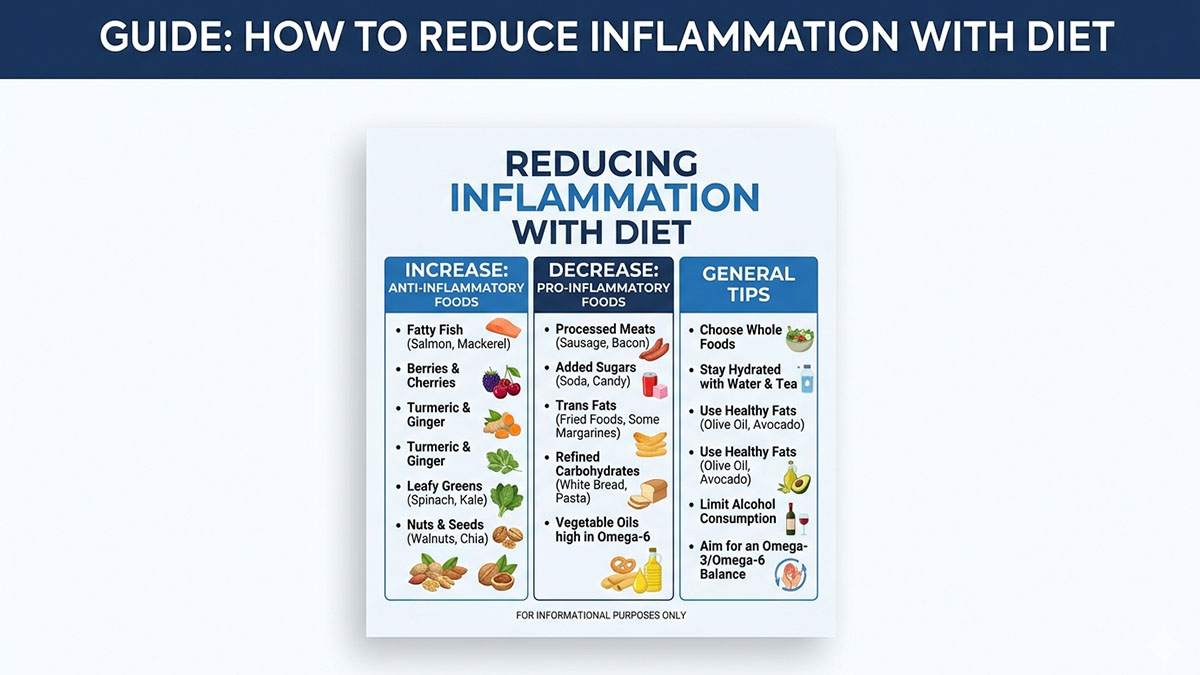
We often think of inflammation as something we can see on the outside like a swollen ankle after a fall or a red mark on the skin. However, there is another type of inflammation that is much more subtle and happens deep within our cells. This is known as chronic inflammation, and while it doesn’t cause immediate pain, it acts like a slow-burning fire that can drain your energy, cloud your mind, and affect your long-term health. The good news is that you hold the “fire extinguisher” in your hands every time you sit down to eat. Learning how to reduce inflammation with diet is one of the most empowering things you can do for your body. It is not about following a complicated medical protocol; it is about choosing vibrant, natural foods that calm your immune system and allow your body to heal from the inside out. By making small, delicious shifts in your daily meals, you can transform your internal environment into one that supports vitality and longevity.
To understand why our food choices matter so much, we have to look at how the immune system reacts to what we eat. When we consume a diet high in ultra-processed sugars, trans fats, and artificial additives, our body views these substances as “invaders.” In response, it stays in a constant state of high alert, releasing inflammatory chemicals into the bloodstream. Over time, this constant “alert” status wears down our tissues and organs. On the other hand, when you focus on how to reduce inflammation with diet, you are providing your body with phytonutrients and antioxidants that tell the immune system it can relax. These nutrients act as messengers of peace, neutralizing the free radicals that cause cellular damage and helping your body return to a state of balance.
The foundation of an anti-inflammatory kitchen is built on color. Think of the deep blues of blueberries, the bright oranges of sweet potatoes, and the dark greens of kale. These colors are not just for show; they represent different types of antioxidants. For instance, the anthocyanins that give berries their dark color are specifically known for their ability to lower inflammatory markers in the blood. When you are trying to figure out how to reduce inflammation with diet, a simple rule of thumb is to make your plate as colorful as a rainbow. The more variety you have, the more different types of cellular protection you are providing. These plants are packed with fiber, which also helps maintain a healthy gut microbiome another key player in keeping inflammation at bay.
Fatty fish are the next major pillar in this journey. Salmon, mackerel, sardines, and anchovies are incredibly rich in Omega-3 fatty acids. These are essential fats that the body cannot make on its own, and they are perhaps the most potent natural anti-inflammatories available to us. Omega-3s work by inhibiting the production of substances that cause inflammation in the joints and blood vessels. If you are looking for practical ways on how to reduce inflammation with diet, aim to include these fish in your meals at least twice a week. If you are plant-based, you can find a different type of Omega-3 in walnuts, chia seeds, and flaxseeds. While the body has to work a bit harder to convert plant-based fats, they still provide a significant benefit and add wonderful texture to your meals.
We cannot talk about cooling the fire of inflammation without mentioning the power of spices. Turmeric and ginger have been used for thousands of years in traditional medicine, and modern science is finally catching up to their benefits. Curcumin, the active compound in turmeric, is so effective at blocking inflammatory pathways that it is often compared to over-the-counter anti-inflammatory medications, but without the side effects. To truly master how to reduce inflammation with diet, try adding a teaspoon of turmeric to your soups, stews, or even your morning latte. Just remember to add a pinch of black pepper, as it increases the absorption of curcumin by up to 2,000 percent. Ginger works in a similar way, soothing the digestive tract and reducing systemic tension.
Healthy fats from plants are also vital. Extra virgin olive oil is a staple of the Mediterranean diet for a reason. It contains a compound called oleocanthal, which has a similar effect to ibuprofen in the body. Using olive oil as your primary fat source for dressing salads or drizzling over roasted vegetables is a cornerstone of how to reduce inflammation with diet. Avocado is another “superfood” in this category, providing monounsaturated fats and vitamin E, which protect cells from oxidative stress. By replacing inflammatory seed oils (like soybean or corn oil) with these high-quality plant fats, you are making a massive shift in your body’s inflammatory profile.
It is also important to look at what we should be reducing. While adding “good” foods is essential, the process of learning how to reduce inflammation with diet also involves stepping away from the “triggers.” Refined carbohydrates, like white bread and sugary pastries, cause rapid spikes in blood sugar and insulin, which are direct drivers of inflammation. Similarly, excessive alcohol and processed meats containing nitrates can keep that internal fire burning. You don’t have to be perfect, but by slowly shifting your balance so that 80 or 90 percent of your food comes from whole, natural sources, you give your body the “breathing room” it needs to recover from occasional indulgences.
Hydration and green tea also play a supportive role. Green tea is rich in a substance called EGCG, which is a powerful polyphenol that protects against cell damage. Swapping one cup of coffee or soda for a cup of green tea is a simple, low-cost way to apply the principles of how to reduce inflammation with diet. Water, of course, is the medium that helps flush metabolic waste out of the system. When you are well-hydrated, your joints stay lubricated and your blood circulates more freely, both of which help prevent the buildup of inflammatory compounds in the body.
Mindful eating and portion control can also influence how our bodies react to food. Overeating, even when the food is healthy, can put a temporary strain on the digestive system and trigger a mild inflammatory response as the body works hard to process the excess energy. Part of learning how to reduce inflammation with diet is listening to your body’s hunger and fullness cues. When you eat until you are satisfied rather than stuffed, your digestion remains efficient, and your body can focus its energy on repair and maintenance rather than just processing a heavy load of calories.
In conclusion, your diet is the most powerful tool you have to control the “climate” inside your body. It is a journey of discovery where you learn which foods make you feel light, energetic, and clear-headed. By focusing on whole, colorful plants, healthy Omega-3 fats, and healing spices, you are taking a proactive step toward a future of health and vitality. Learning how to reduce inflammation with diet is a gift you give yourself every single day. It is an investment in your joints, your heart, your brain, and your overall sense of well-being. Start small, pick one anti-inflammatory food to add to your plate today, and enjoy the feeling of your body’s internal fire slowly cooling down into a steady, healthy glow.